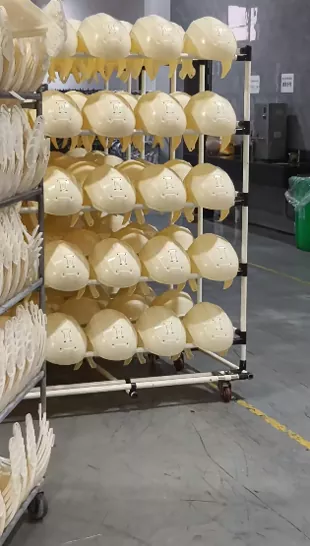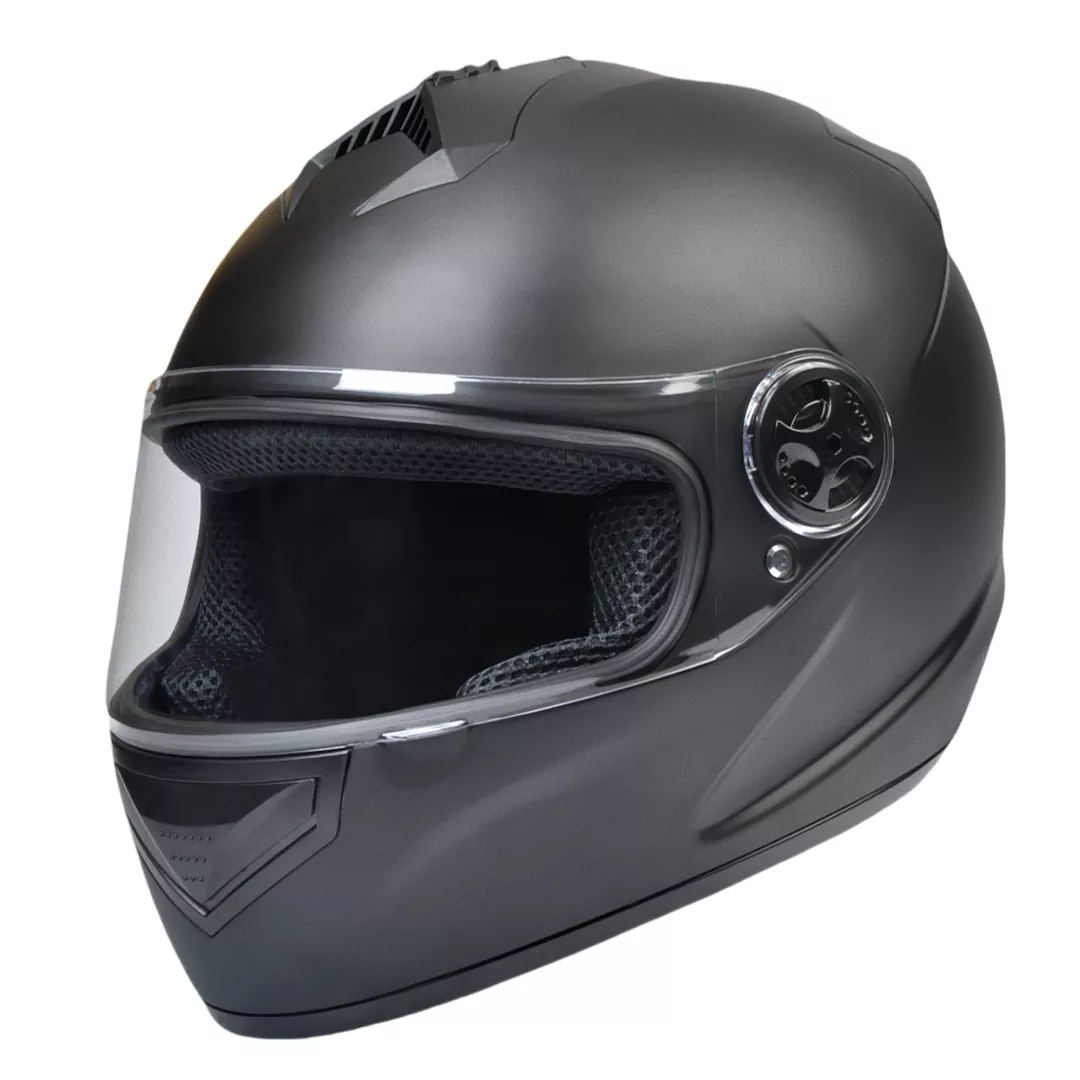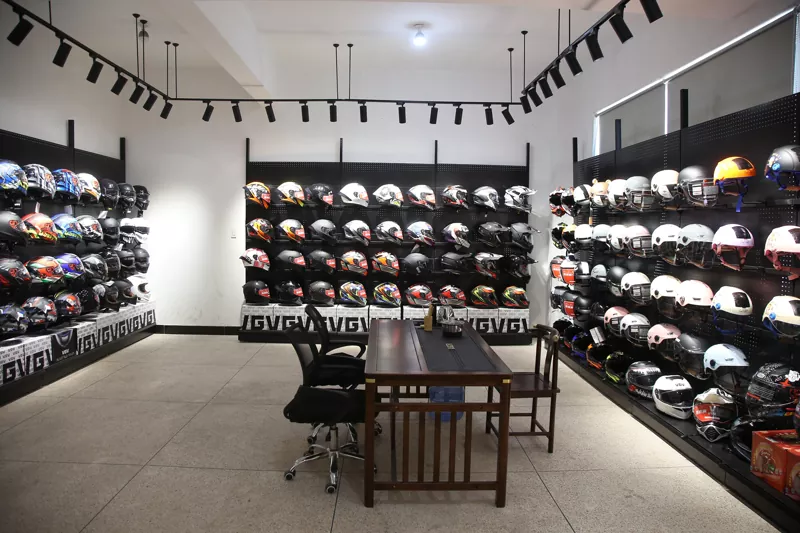

You want to know how much paint actually ends up on a helmet? Come watch our booth. In a normal shift we'll run 800 shells through, and what comes out the other end is a clean, even coat — no runs, no drips, no patches where the paint thinned out. That didn't happen by luck, and it doesn't happen by hand.
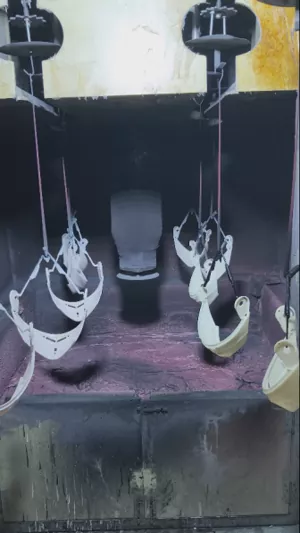
Our spraying booth is kept under positive pressure, so dust and shop air don't get pulled in. Right before a shell goes in, it's blown clean with ionized air to knock off static and any dust that settled on the surface. If there's lint on the shell, you'll see it in the paint, so we kill it before it ever gets wet.
The shells hang on a line and move past the spray station at a set speed. That speed is matched to the paint and to the gun settings. Too fast and the coat comes out thin; too slow and you're just wasting paint. The painter stands at the station, but the gun does the even work — it's set once for the job and doesn't get changed halfway through.
We don't hand-spray these shells. A hand-held gun in a busy booth gives you variation: one shell a bit thicker here, another a bit thin there. Variation is what turns into rejected parts. So the shells ride the line, and the gun stays put.
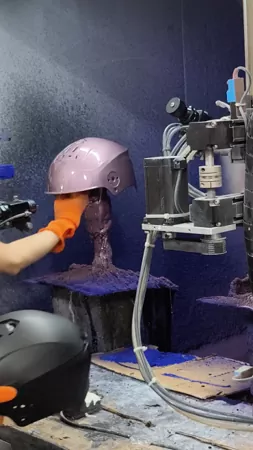
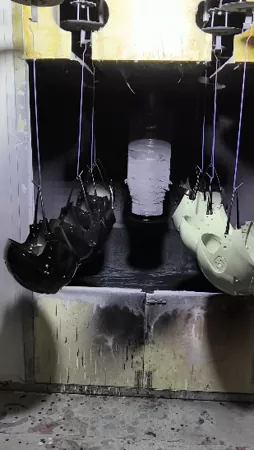
Overspray is paint that goes everywhere except on the part. Most of it comes from a bad angle, a gun held too far away, or a station set up wrong. We set the gun distance and the air pressure once per job, and the painter holds the shell at a fixed angle. So instead of paint bouncing off into the air, it lands on the shell.
That's not just about saving paint — though it does save paint, and that's a cost we don't pass on to the buyer. It's about a consistent film. When the paint lands evenly, the film thickness is the same across the whole shell — and that's what gives you a color and gloss that match, plus a finish that wears evenly. A thin spot is where the helmet later chips or fades.
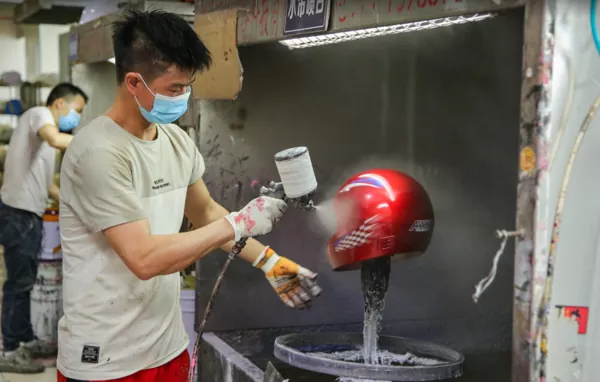
Every helmet we paint gets three coats: a primer, the color, and a clear coat on top. Each one goes through its own station in the same booth. The clear coat is what gives the shell its shine and its resistance to scratching — and it's the thinnest one, so it's the easiest to get wrong. We set it the same way: gun distance, air pressure, line speed, all fixed before the job starts.
We don't rely on how it looks. A film thickness gauge reads the coating in several spots on each shell — the crown, the sides, the edges. Edges are where most booths go thin, because paint slides off a curve. Ours get checked every time. If a reading is low, the shell goes back and gets re-shot, not shipped.
After the booth, the shells go through the curing oven at a set temperature and time. We measure that too. If the curing is too short, the paint stays soft and chips easily. If it runs too long or too hot, the paint can yellow or crack. The oven temperature is logged on every run, so we can check each batch later.
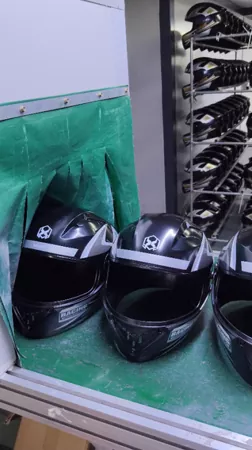
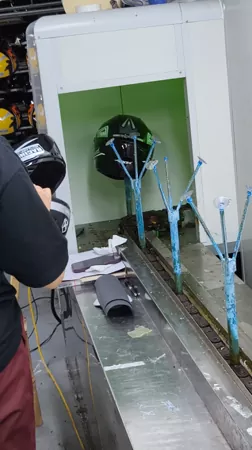
Buyers notice the color before anything else. If you order a run of helmets in a custom color, every shell has to match the one next to it, and they all have to match the sample you approved.We keep a reference panel from your approved sample, and the painter checks the first few shells of every batch against it. If it's off, we stop before we paint 800 wrong ones.
We can match to a color card you send, or to a paint code. For big orders, we'll mix a dedicated batch of paint so there's no variation between cans. Because the booth runs a fixed recipe, the color you got on the sample is the color you get on the container.
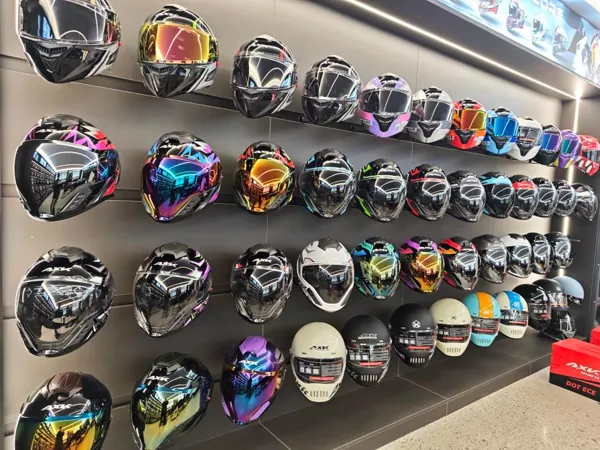
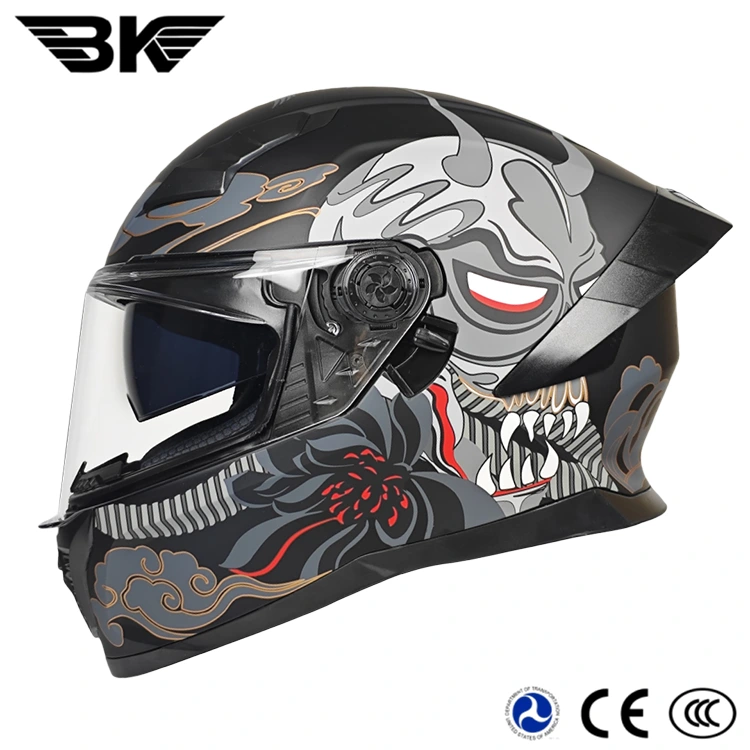
If you're buying finished helmets under your own brand, the paint is the first thing your customer touches. A booth that sprays clean means consistent color and a finish that holds up. It also means fewer rejects on our side, which means fewer surprises on yours — no short shipments, no "we'll fix it on the next order."
Want to see it run? We'll put a camera in the booth on a video call, or send you a shell from today's line so you can check the finish yourself. That's the easy way to find out if the paint is as good as we say.