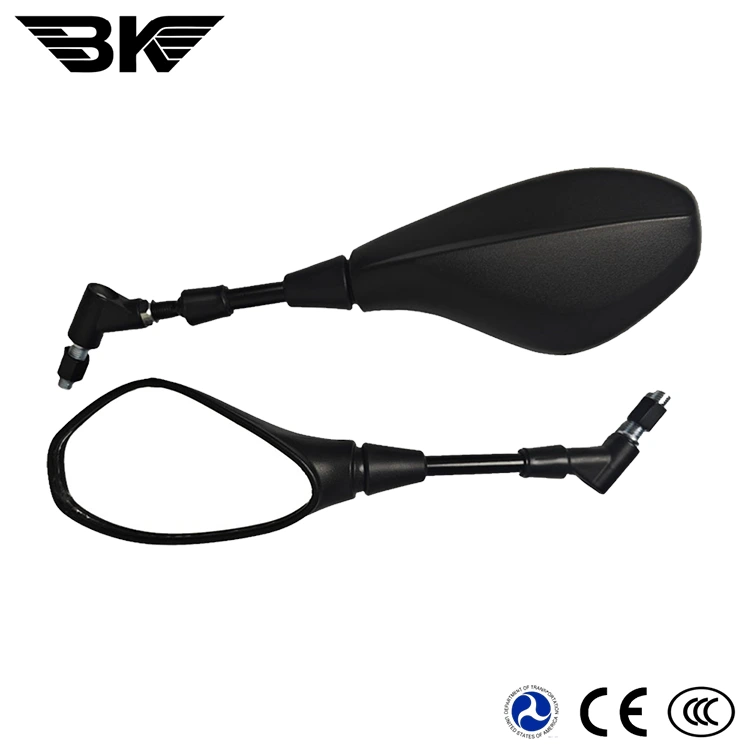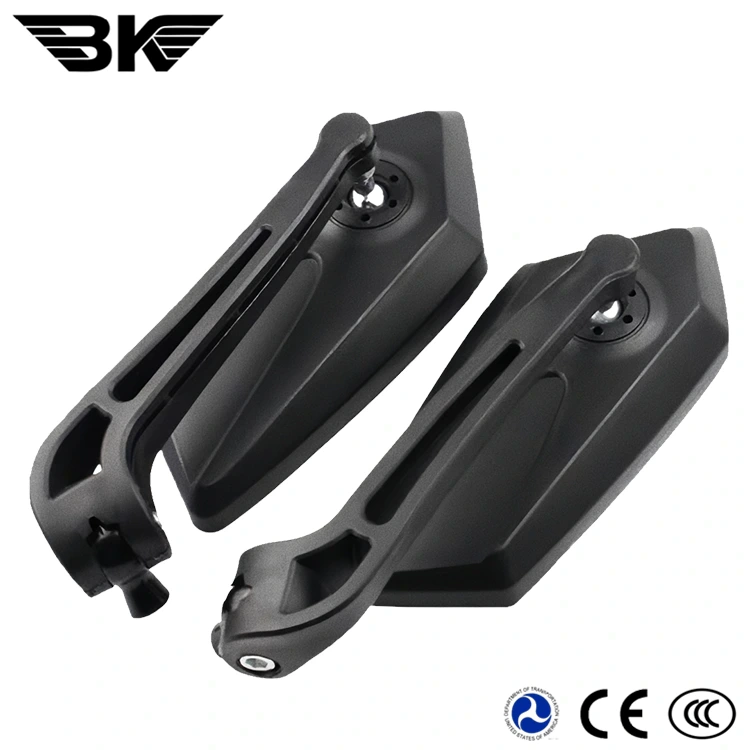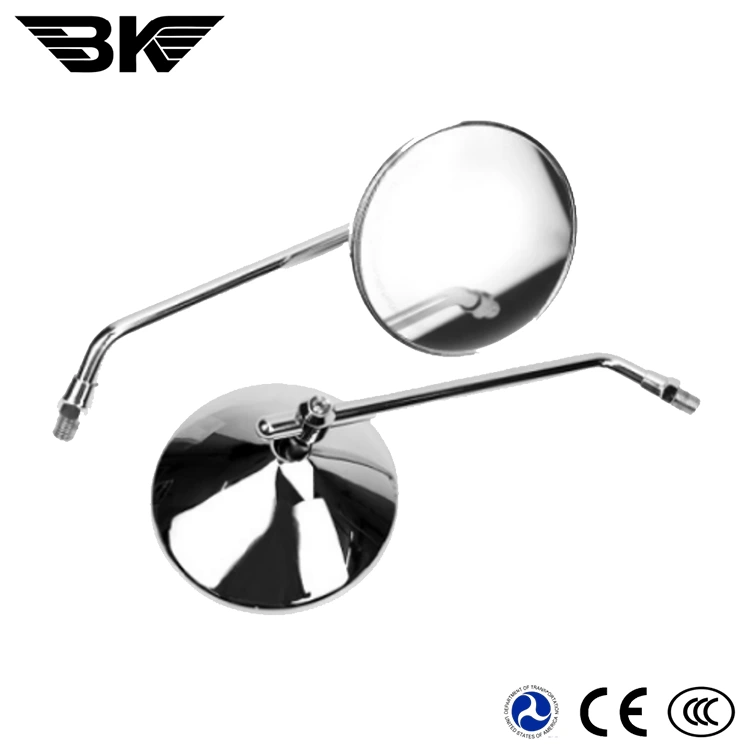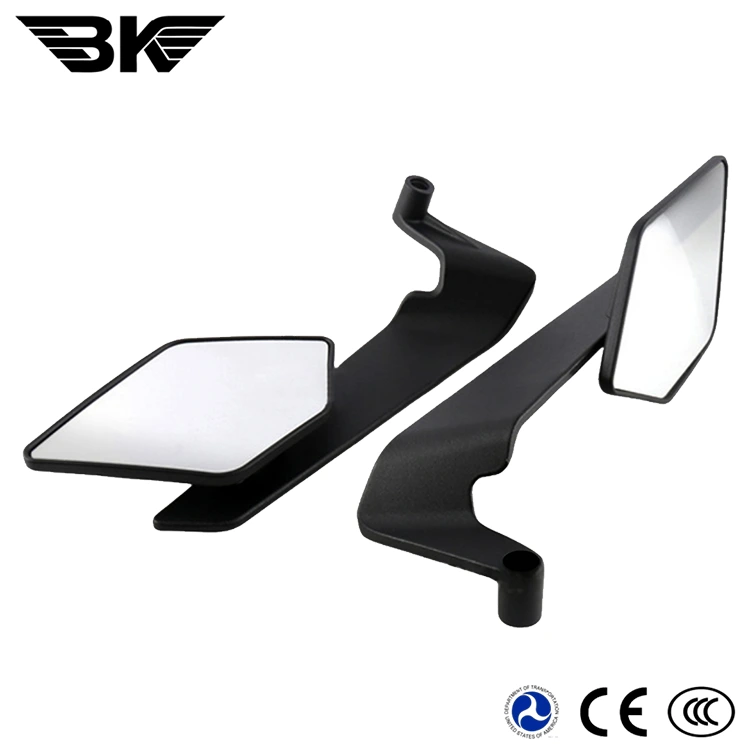

PP Rearview Mirror, as a important category of Ningde Chief Pigeon Technology Co.Ltd., Universal Motorcycle Rearview Mirrors mainly consist of three parts: the lens, the mirror housing (frame), and the mirror rod (support). They are primarily categorized by material as follows:
1. Glass Lens (Most Common) of Motorcycle Rearview Mirror Round and irregularly shaped rearview mirrors.
Material: High-purity silicate glass, with a silver, aluminum, or chromium reflective coating.
Advantages: Extremely high clarity, realistic reflection, scratch and wear resistant, not prone to aging and yellowing, good high/low temperature resistance.
Disadvantages: Fragile, easily shattered by severe impact; heavier than plastic lenses.
Applications: Most original equipment manufacturer (OEM) and mid-to-high-end rearview mirrors, standard equipment on universal models.
2. PC/Acrylic Plastic Lens of universal Folding Side Motorcycle Rearview Mirror
Material: Polycarbonate (PC) or acrylic (PMMA) engineering plastic.
Advantages: High impact resistance, not easily broken, extremely lightweight, low cost.
Disadvantages: Easily scratched surface, slightly inferior clarity and optical distortion compared to glass, prone to aging and blurring under prolonged sunlight.
Applications: Low-cost general-purpose mirrors, anti-fall modification mirrors for off-road/retro motorcycles, auxiliary small round mirrors.
Mirror Housing & Mirror Stem Materials (Outer Shell and Bracket)
1. ABS Engineering Plastic (Most Common),ABS Rearview Long Mirror Motorcycle
Material: ABS resin (high-strength acrylonitrile-butadiene-styrene copolymer).
Advantages: Low cost, lightweight, good toughness, impact resistance, easy to mold, available in various colors/paints.
Disadvantages: Prone to aging and fading under prolonged sun exposure; lower strength than metal.
Applications: Entry-level to mid-range general-purpose rearview mirrors, scooter original mirrors, most aftermarket mirror housings.
2.PP Motorcycle Rearview Mirror Bracket
PP material rearview mirrors are tough, drop-resistant, and inexpensive, but they have poor rigidity, are prone to shaking, are difficult to paint, have a generally poor texture, and are easily deformed.
3. Aluminum Alloy (Main Metal)
Material: Aluminum alloy (mostly 6061/7075 forged), anodized or painted surface.
Advantages: High strength, lightweight, durable, corrosion resistant, high-end feel, less vibration during high-speed riding.
Disadvantages: High price, complex processing, some alloys are prone to deformation from impacts.
Applications: Mid-to-high-end general/modified mirrors, high-displacement street/rally bike mirrors, retro bike metal mirrors.
Motorcycle Aluminum Alloy Rearview Mirrors
Material: Carbon fiber woven fabric + resin curing.
Advantages: Ultra-lightweight, extremely high strength, good rigidity, sporty appearance, anti-aging, high-speed stability.
Disadvantages: Expensive, high maintenance costs, single color (black).
Applications: High-performance modification, racing, high-end high-displacement dedicated rearview mirrors.
Motorcycle Carbon Fiber Rearview Mirrors
lower cost than carbon fiber.
Disadvantages: Average surface texture, difficult to create intricate shapes, some products are prone to delamination.