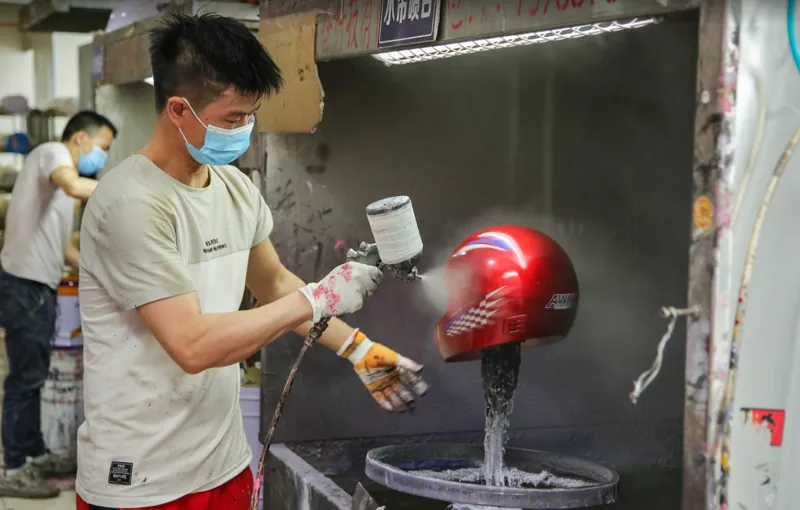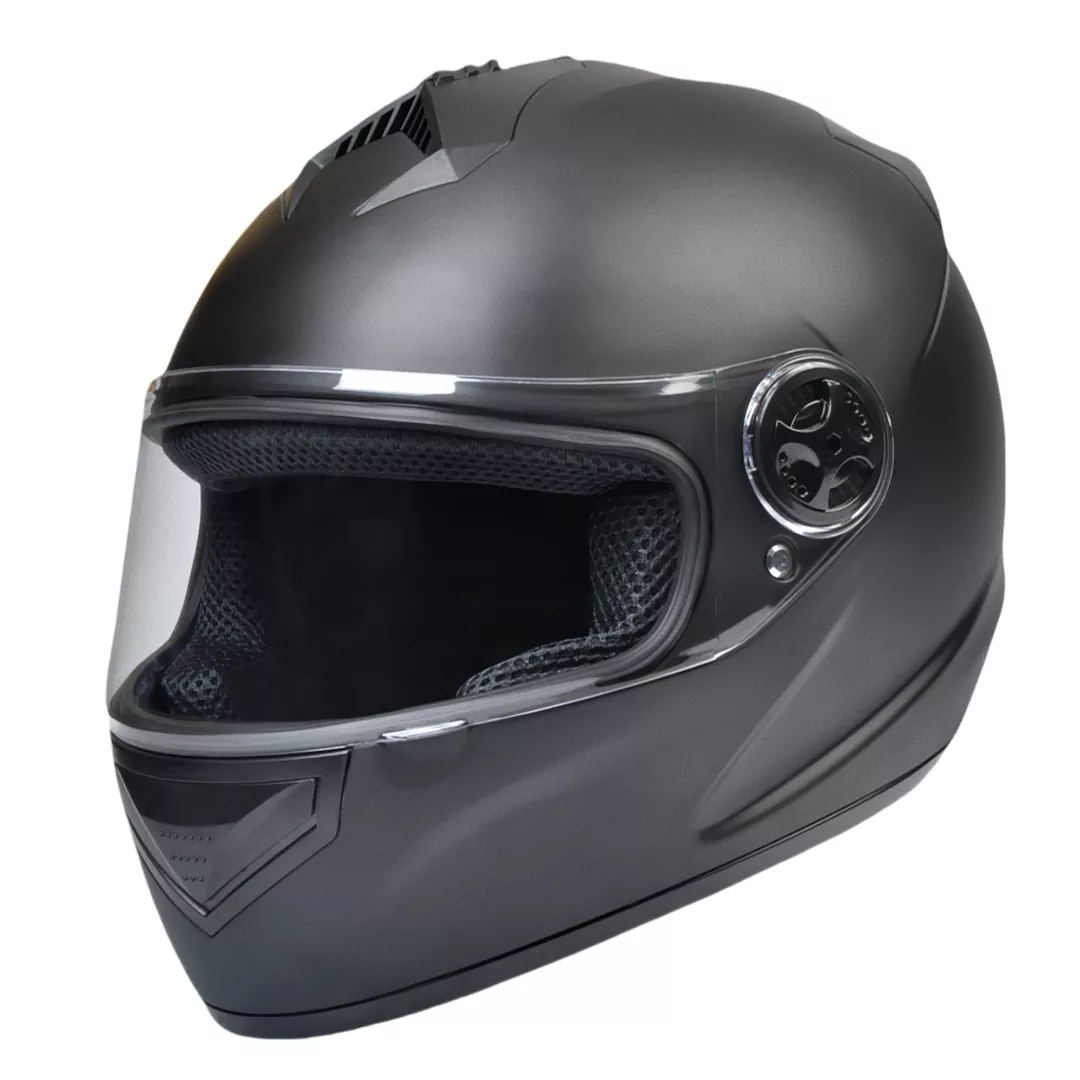

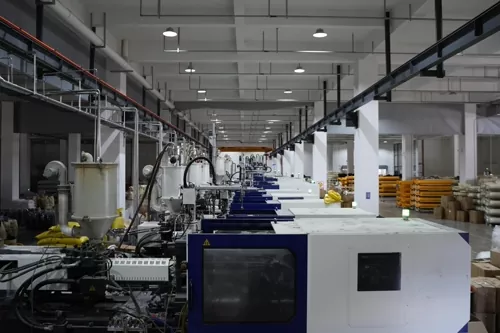
On any working day, walk into our injection shop and this is what you see: rows of ABS machines running, a helmet shell dropping off every few seconds, and our QC people right there at the line checking the parts as they come out. The shop is loud, the air smells of hot plastic, and everybody's busy with their own job. Nothing sits around.
We turn out about 12,000 helmet shells a day. That's the number we quote to buyers, and we hit it — but not because we overdrive the machines. We hit it because the whole process is locked down and repeatable. Output on a stable line is boring in a good way. Output on a stable line is boring in a good way. Nothing surprises us, which means we can promise a delivery date and actually keep it.
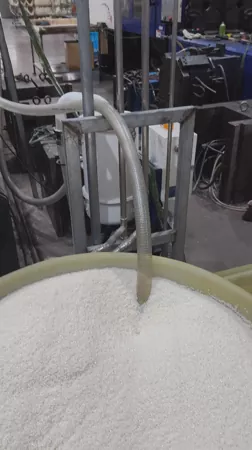
Each shell begins as ABS pellets. They come in sealed bags, and before they ever reach the machine hopper, they're dried. ABS picks up moisture from the air, and moisture is the enemy of a clean mold — it causes surface defects and weak spots you only see under a drop test. So we dry first. No shortcuts.
From there, the pellets go into the injection unit, get melted, and are forced into a hardened steel mold at a set temperature and pressure. Every shell size has its own cycle time. Run it too fast and the walls come out thin, with weak knit lines. Run it too slow and you're just wasting machine time.Our molders know that balance by feel as much as by the readout on the panel. A good molder can hear when a machine is off by half a second.
The molds themselves are the heart of it. We use hardened steel, and we check the mold surface every shift. A worn mold makes a slightly off shell — and "slightly off" is exactly where cracks and failures begin. So we catch wear before it happens, not after. When a mold starts to drift, it comes out for service, and a spare takes its place. There's no "we'll finish the batch first."
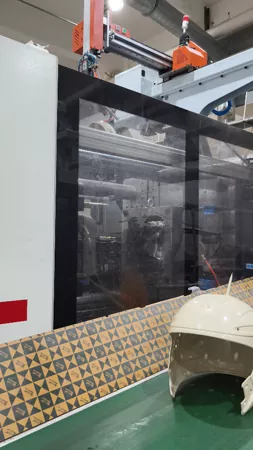
A helmet is a safety product. If a shell has a bad knit line or a weak spot nobody sees, it can fail in a drop test. We can't ship that, and we won't. So QC isn't a final checkpoint — it's built into the flow.
Every batch is checked against AQL sampling, and the inspector signs off on each lot before it moves to painting. But that's the minimum. Beyond that, we pull samples from every production run and impact-test them. Wall thickness gets checked in several spots. And we go over the shell for flash and sink marks — the small stuff that's easier to catch by running a hand over it than by looking at a picture.
Here's the part that matters: if a sample fails, the whole batch stops. We don't sort around it and keep going. We trace it back to the exact machine, the exact shift, and the exact operator, find the root cause, and fix it before the line starts again. That's what "zero tolerance" means on the floor — not a slogan, but a procedure.
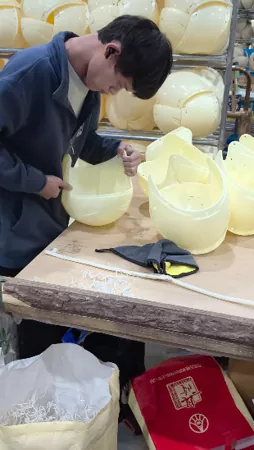
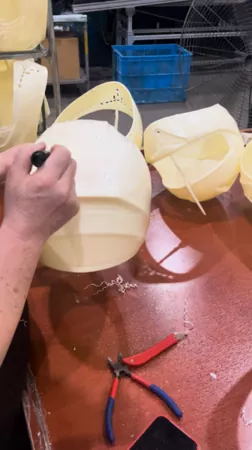
If you're putting your own brand on our shells or finished helmets, zero tolerance is what protects your name. A batch with even 3% hidden defects costs you returns, complaints, freight back, and a damaged reputation you don't get to reset. On our line, that 3% never makes it into the crate in the first place. Fewer surprises on your end, less time spent explaining things to your customers.
And because the process is stable, we can commit to dates. When we say a container is ready on the 20th, it's ready. The line runs on a schedule, not on a hope. For buyers planning seasonal launches — spring sales, back-to-school, winter rushes — that reliability is worth more than a slightly cheaper quote from someone else.
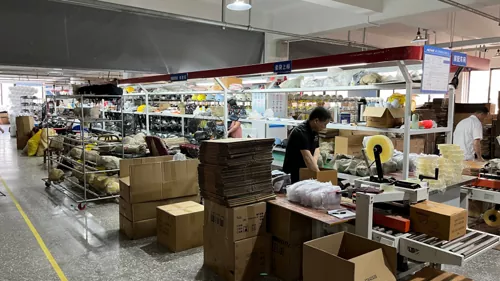
We don't ask you to take our word for it. We're happy to walk you through the line on a video call — you'll see the machines cycling, the QC guys working, the shells coming off. Or send us your mold spec and we'll run a sample for your review. We can talk about it all day, but this is how we back it up: you watch the line yourself on the video call, or you run a sample from us and see.
12,000 a day means nothing if the quality isn't there. That's how we run this place: we keep the output up, and we keep the defects out. Come and see it for yourself.